Why I Am Not a Christian Zionist
May 2026
By Andrew Bush, D.Min.
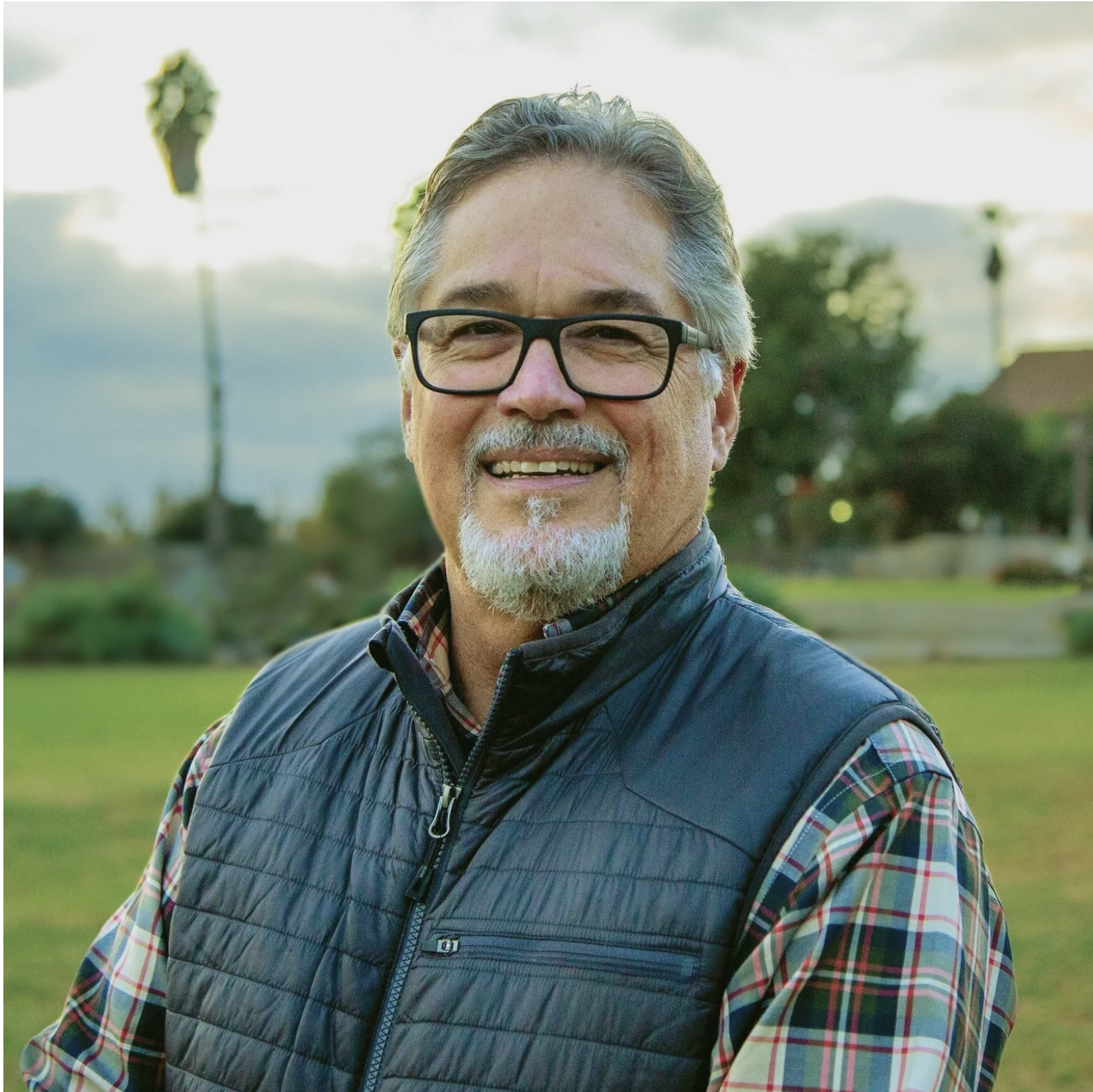
Andrew Bush, D.Min.
The early 1970s were tumultuous in the United States. The Vietnam War shuddered to an end, but its repercussions would be felt among American youth long afterward. I was living in northern New Mexico during those years in the flow of the counterculture movement. I was far from Christian faith, wrapped in the blanket of cynicism and unbelief. Yet, God’s grace reached me even in that sorry condition. I came to faith in Jesus Christ as Lord and Savior. With my wife, I found a spiritual home in evangelical churches where dispensational theology was deeply woven into the fabric of their teaching, as was an emphasis on international missions.
In 1987, we began serving in the Philippines. In 1998, after eleven years, we transferred to Palestine because of a fortuitous friendship with a future Palestinian Christian leader formed in Manila. We began work there in a village north of Ramallah, opening a ministry center for the Palestinian Bible Society.
The checkpoints that restricted travel for Palestinians and the news of house demolitions were troubling. The practical implications of the teaching that Israel had an irrevocable claim to all the land of ancient Israel meant that another people’s freedom and peace had to be destroyed. The question of how such harsh actions related to the love of God for all people could not be ignored. How did taking land by force relate to the self-emptying of Christ on the cross?
The outbreak of the Second Intifada was a shock. What I thought would last four weeks dragged on for four years. Throughout the West Bank, roads were dangerous to travel, and checkpoints further choked normal movement. During that time, our Muslim neighbors often helped my wife and me, bringing us bread or gas for our stove. At the same time, friends who were steeped in Christian Zionism in the US expressed deep antipathy toward Muslims.
During those years, it became clear that the fruit of Christian Zionism was prejudice, support for violence against an indigenous people, the lack of empathy toward fellow Christians in Palestine, and the subjugation of the clear ethical teachings of Jesus to speculative interpretations of prophecy. If, as Jesus taught, we can know a tree by its fruit, Christian Zionism was rotten.
There was no other way forward than to abandon the theology of Christian Zionism, and in its stead, embrace the centrality of Christ’s teaching to love one’s neighbor as oneself and the redemptive work of the cross and resurrection. Every theology must be evaluated in light of the utter love poured out through the crucifixion of Christ. This has been the result of our long geographic and spiritual journey: the love of Jesus must be at the center of our lives.
Rev. Andrew F. Bush, D. Min., is a pastor, professor, author, and long-time leader in cross-cultural Christian service. He and his wife, Karen, have served in the Philippines since 1987 and in Palestine since 1998. Presently, while continuing to guide the Harvesters Christian Fellowship network of congregations, which they planted in Manila, the Philippines, Andrew teaches courses in Peace and Justice at Bethlehem Bible College in Palestine, and is the pastor of the Hebron Road International Church Online, which gathers people from numerous nations who want to pray for the Middle East. He is a professor emeritus in missiology at Eastern University, Saint David's, Pennsylvania. His books include Learning from the Least: Reflections on a Journey in Mission with Palestinian Christians and Millennials and the Mission of God: A Prophetic Dialogue. He has also written numerous articles for professional journals and conferences.
Andrewholds post-graduate degrees from the École Biblique et Archéologique Française in Jerusalem, Israel, and the Princeton Theological Seminary in Princeton, New Jersey. Dr. Bush and his wife attend a Mennonite congregation in Lancaster, Pennsylvania, which is their home base when they are not overseas in the Philippines or the Middle East. They enjoy worshipping in different Christian traditions.